Who Does the Healing?
Supporting an adoptee without handing them the burden
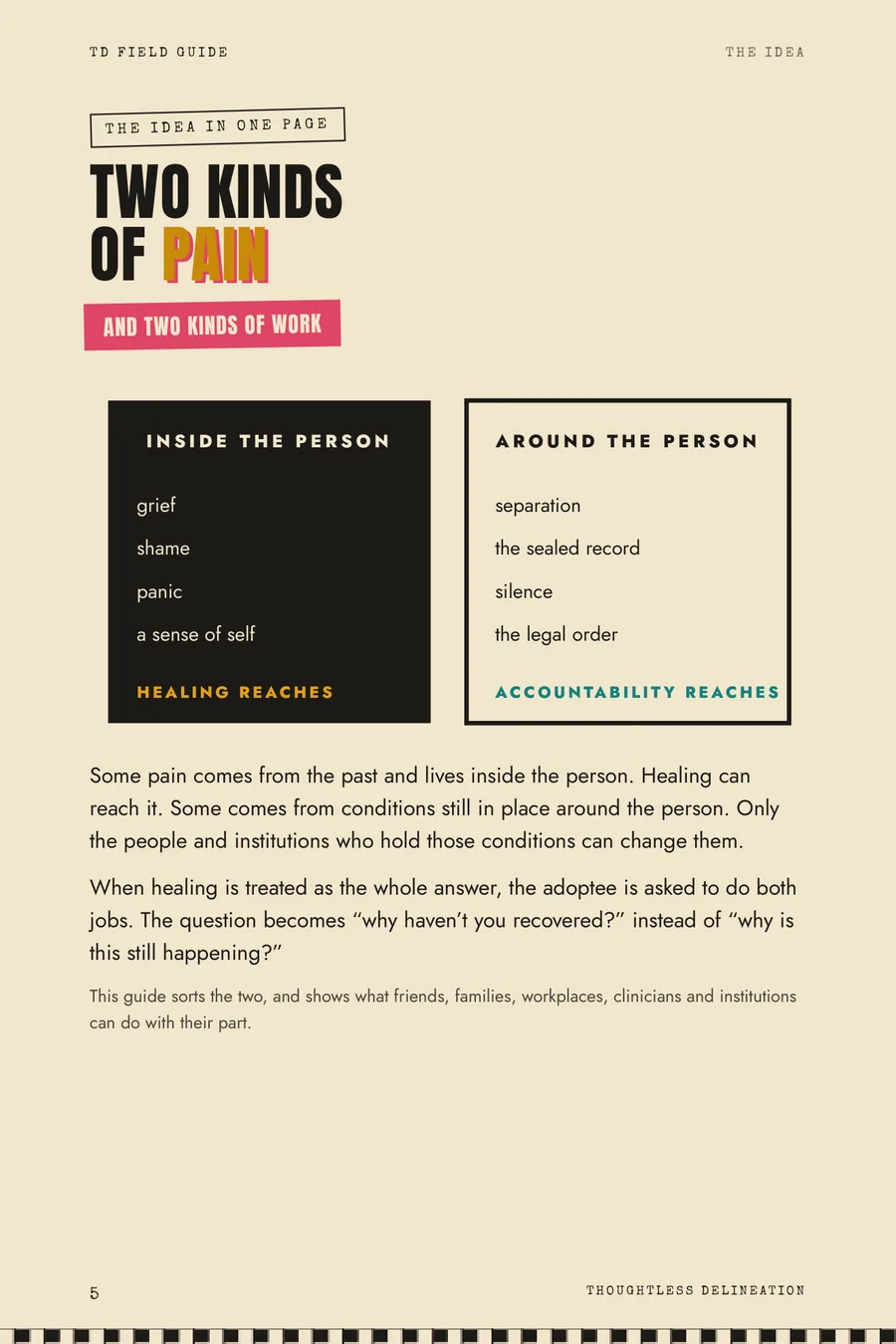
When someone we love is hurting, we reach for healing. It can help an adopted person a great deal. But some of what adoptees carry is not inside them. It is still happening around them: separation, sealed records, silence, a legal tie that is hard to undo. This guide sorts the two, and shows what you can do with your part.
Look inside
Who it’s for
Friends and partners
You don’t need to know adoption law or theory. This guide shows how to stay steady through things you can’t fix, and which kind words quietly hand over the weight.
If you adopted
This guide is not here to blame you. You may be closest to the adoptee and part of the story they are working through. Both can be true. It shows what helps from where you stand.
Relatives and colleagues
The people at the family table and the office. What to say instead of “you know who your real family is”, and how to fix a form that asks for a life story.
Professionals and institutions
Clinicians, counsellors, agencies and registries. How to tell a symptom from a condition, and how to measure progress by what changed outside the room too.
What’s inside
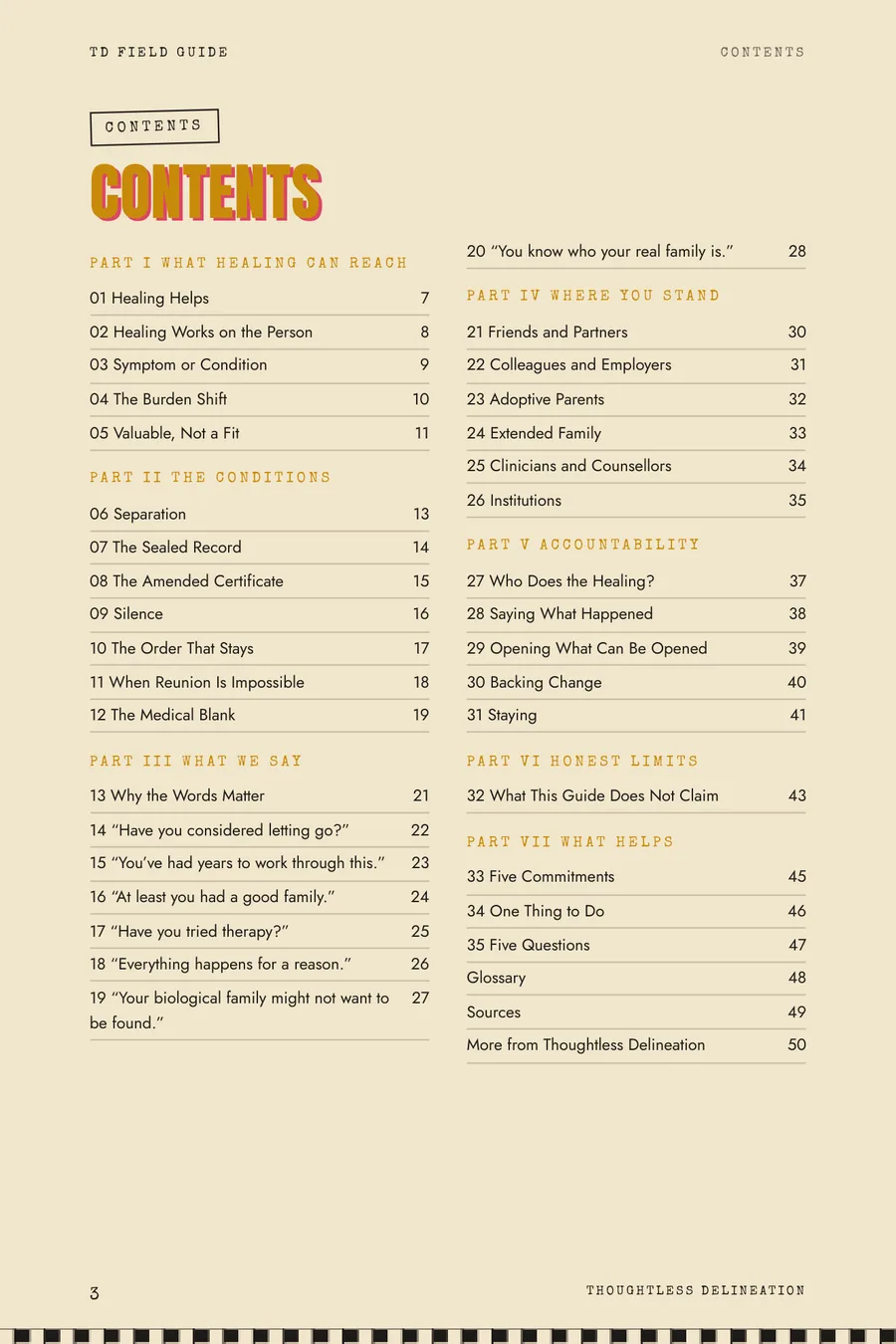
Seven parts, from what healing can reach to what helps. Each page is one idea.

- What healing can reach (pp. 6–11). Healing helps; healing works on the person; symptom or condition; the burden shift; valuable, but not a fit.
- The conditions (pp. 12–19). Separation, the sealed record, the amended certificate, silence, the adoption order that stays, when reunion is impossible, and the medical blank.
- What we say (pp. 20–28). Seven kind phrases that hand over the burden, why each lands hard, and what to say instead.
- Where you stand (pp. 29–35). What helps for friends and partners, colleagues and employers, adoptive parents, extended family, clinicians and institutions.
- Accountability (pp. 36–41). Who does the healing; saying what happened; opening what can be opened; backing change; staying.
- Honest limits (pp. 42–43). What the guide does not claim.
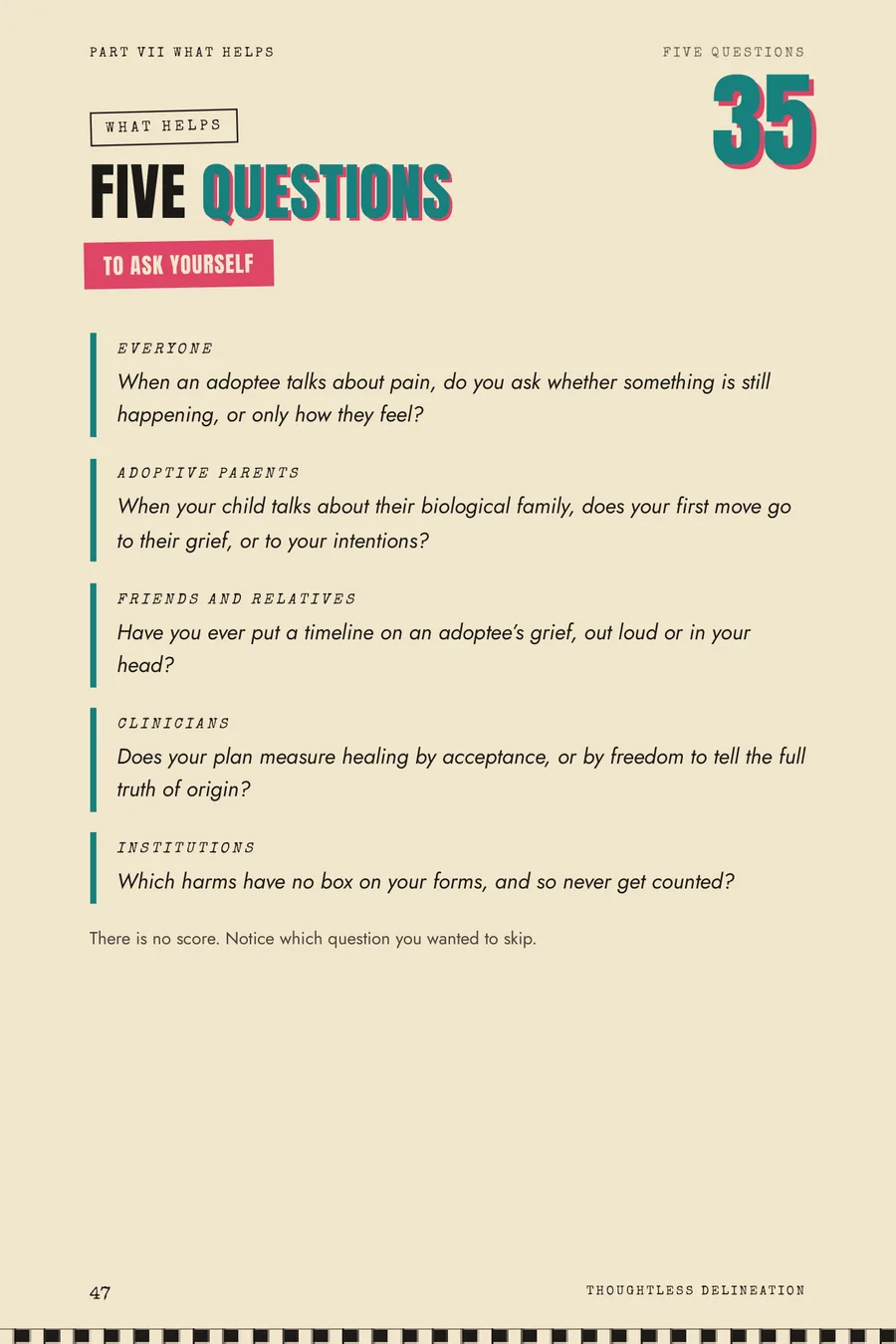
- What helps (pp. 44–47). Five commitments, one thing to do, and five questions to ask yourself.
It closes with a glossary, a sources list, and links to more of Shane Bouel’s work.
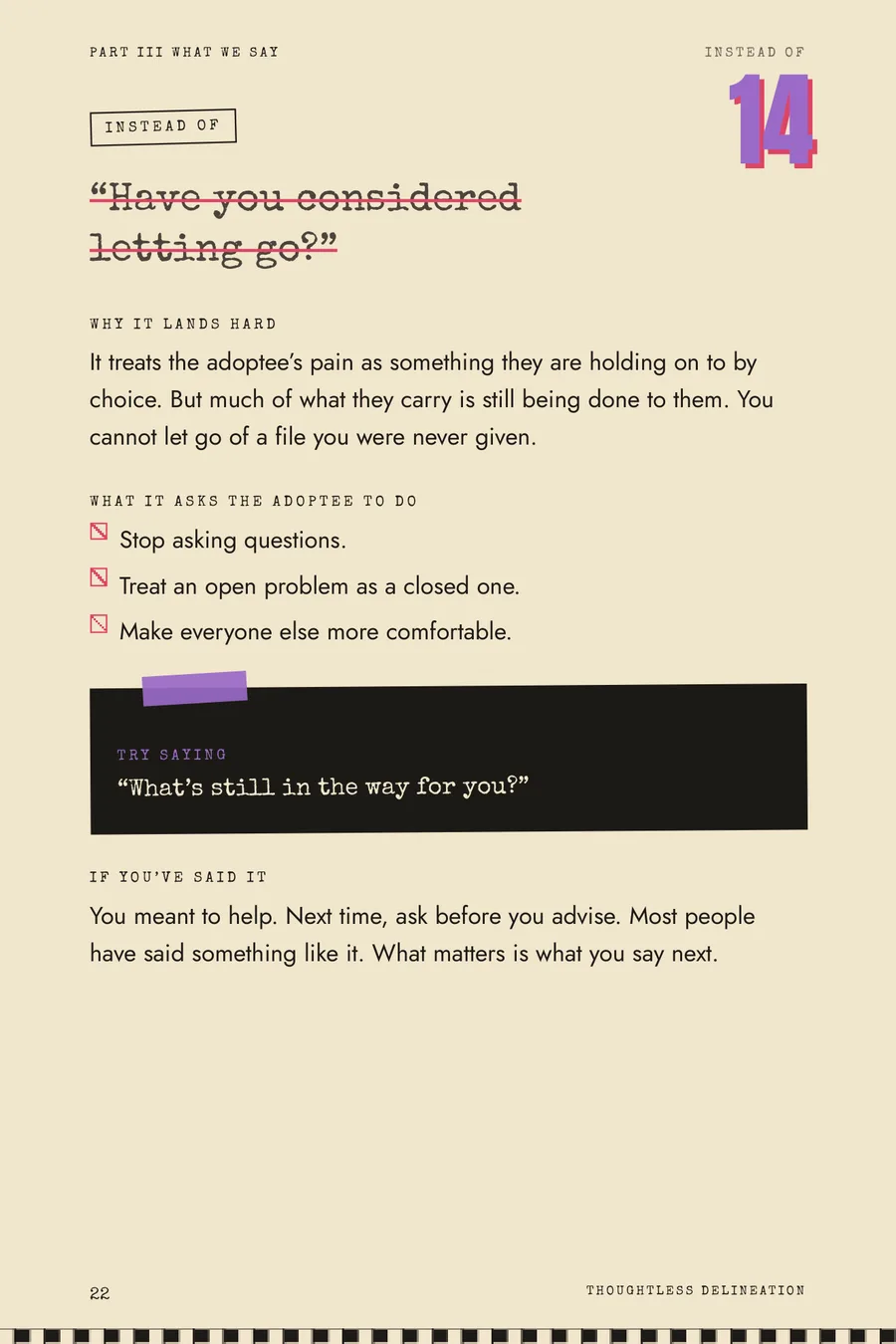
Sample page: “Have you considered letting go?”
Why it lands hard
It treats the adoptee’s pain as something they are holding on to by choice. But much of what they carry is still being done to them. You cannot let go of a file you were never given.
Try saying
“What’s still in the way for you?”
Questions
Is the guide against therapy or healing?
No. Healing helps many adoptees, and the guide starts there. It is about fit: healing works on the person, while some conditions sit outside the person and only change when others act.
What is the burden shift?
When healing is treated as the whole answer, the question changes from “why is this still happening to you?” to “why haven’t you recovered?” Only the adoptee can answer the second question, so the work lands on them.
Does the guide say adoptive parents are bad people?
No. Most act from love. The guide is about where the weight lands, not who is good or bad. A page lists exactly what it does not claim.
Is it legal advice?
No. It explains, in plain words, how records and adoption orders can work, using Queensland law as an example. Laws differ by place, so check the rules where the adoption happened.
Is it safe to read?
It is written to be taken slowly. If it stirs things up, in Australia Lifeline is on 13 11 14, any hour. Elsewhere, contact a local crisis line or someone you trust.
Also in the series: No. 01: The Machinery of Adoption, Named and No. 02: Who Gets the Empathy?